
Generally colors like dark charcoal, near-black, deep navy blue, dark grey, deep burgundy/red wine, warm espresso brown etc. are best choices for a movie room. It will never be too wrong with these colors. If you like some other colors, make sure these colors are the main color of the room, and then you can add some small part of other colors to decerate it.
Why choose these colors for your movie theater room?
These colors mentioned above don’t just look great but also dramaticlly improve picture quality, reduce eye strains and pull you deeper into the cinematic experience.
1. Dark Charcoal or Near-Black
This is the gold standard for dedicated home theaters and for good reason. Deep charcoal shades like Benjamin Moore’s”Cheating Heart” or Sherwin-Williams'”Caviar” absorb ambient light completely, maximizing on-screen contrast and color accuracy.
They create a true cinema atmosphere and make your screen look dramatically brighter without any extra brightness from your projector or TV.
Best for: Dedicated theater rooms, projector setups, rooms with little to no natural light.
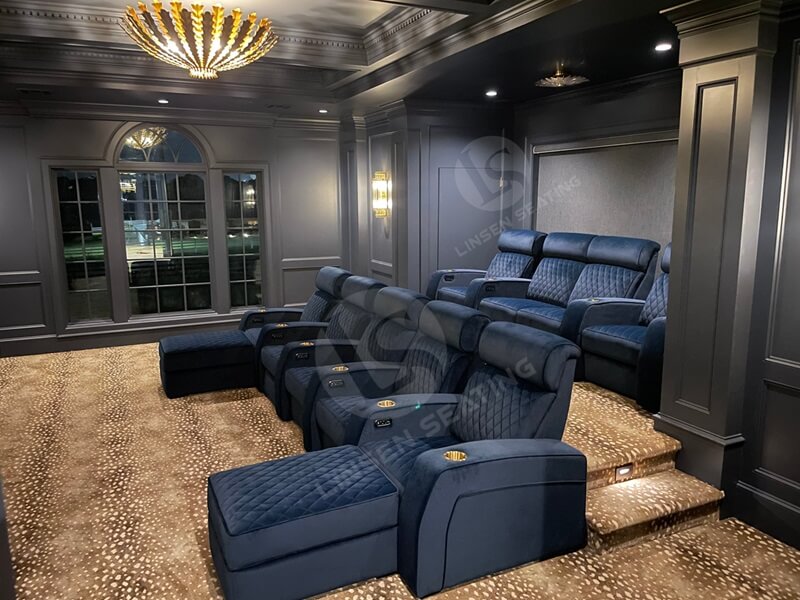
2. Deep Navy Blue
If pure black or charcoal feels too cold or cave-like, deep navy blue is an excellent alternative. It absorbs light nearly as well as dark grays, but adds warmth and a sense of luxury. Navy creates an immersive atmosphere without starkness of pitch black, and pairs beautifully with dark leather or velvet home theater seating. This is the gold standard for dedicated home theaters and for good reason. Deep charcoal shades like Benjamin Moore’s”Cheating Heart” or Sherwin-Williams'”Caviar” absorb ambient light completely, maximizing on-screen contrast and color accuracy.
Best for: Rooms where you want drama ard elegance alongside great picture quality.
3. Dark Gray (Medium to Deep)
A deep, matte gray like “Amherst Gray” or “Iron Mountain” gives you most of the light- absorption benefits of black while feeling slightly softer and more lived-in. It’s an ideal choice for multi-purpose media rooms that also serve as family rooms or entertainment spaces, where you don’t want the room to feel like a bunker during daylight hours.
Best for: Multi-purpose media rooms, families who want cinematic quality without an all-black space
4. Deep Burgundy or Wine Red
For a classic Hollywood cinema feel, rich wine reds and burgundies deliver unmatched warmth and grandeur. These deep tones still absorb significant light while giving the room the theatrical drama of a classic movie palace. Paired with gold sconce lighting and plush recliner seating, this palette transforms a room into a genuine showpiece.
Best for: Cinephiles who want a theatrical, old-Hollywood aesthetic.
5. Warm Espresso Brown
Deep chocolate or espresso browns are a underrated choice for movie rooms. They’re cozy and inviting, absorb ambient light well, and create a warm, enveloping atmosphere that makes long movie sessions feel comfortable. Brown tones also coordinate naturally with leather home theater seating – one of the most popular seating choices.
Best for: Cozy, casual home theaters with leather seating and warm wood accents.
How to match wall color to your home theater seating?
Your home theater seating and wall color: should work together to create a cohesive, immersive environment. Here’s how to pair them:
- Charcoal walls + black leather recliners: The ultimate cinematic look. Clean, bold, and professional.
- Navy walls + dark gray fabric sectional: Sophisticated and cozy – great for family movie nights.
- Burgundy walls + caramel leather seating: Warm, theatrical, and deeply inviting. Old-Hollywood at its finest.
- Dark gray walls + charcoal velvet seating: Modern and luxurious, with a high-end lounge feel.
- Espresso brown walls + tan leather chairs: Earthy, relaxed, and incredibly comfortable for long sessions.
What are the ceiling and floor color should movie room be?
The ceiling is often painted white by default – but in a dedicated movie room, that’s a mistake.
A bright white ceiling will catch light from your screen and bounce it around the room. Paint it the same dark color as your walls, or at least a shade darker, to maintain a fully light-controlled environment.
For flooring, dark carpet is the top choice – it absorbs sound, provides warmth underfoot, and eliminates floor-level light reflection. If you prefer hard flooring, use dark area rugs in the seating zone to achieve a similar effect.
Conclusion
For a dedicated home theater focused purely on picture performance, go with deep charcoal or near-black in a flat finish – you won’t find a better option. If you want warmth and personality alongside great viewing quality, deep navy,burgundy, or espresso brown are excellent choices that deliver both style and cinematic immersion.
Whatever color you choose, pair it with a matte finish, blackout curtains and seating that complements the palette. The result will be a room that doesn’t just look like a home theater – It feels like one from the moment you sit down and hit play.
Related Products:
 Home Theater Seating Finishing: How to Choose the Right Upholstery
Home Theater Seating Layout – Curved Or Straight Row
4 Seat Theater Seating
How To Hide Power Recliner Cords | Electric Recliner Cord & Wire Concealing Guide
Best Home Theater Seating Arrangement & Layout
How To Do Soundproofing And Acoustics in a Home Theater?
Home Theater Seating Finishing: How to Choose the Right Upholstery
Home Theater Seating Layout – Curved Or Straight Row
4 Seat Theater Seating
How To Hide Power Recliner Cords | Electric Recliner Cord & Wire Concealing Guide
Best Home Theater Seating Arrangement & Layout
How To Do Soundproofing And Acoustics in a Home Theater?