
Curved home theater seating arranges your recliners on a gentle arc so every seat faces the screen, not just the seats in the middle. The result is sharper sightlines, more balanced sound and a genuinely immersive, theater-like room. Linsen Seating builds curved home theater seating in 2-, 3-, 4- and 5-seat rows — with or without consoles — all fully customizable and shipped worldwide.
Why choose curved home theater seating
In a straight row, the seats on each end view the screen at an angle, which distorts the picture and pushes those viewers off the audio sweet spot. A curved row solves this by aiming each seat toward the display, so end-row viewers get a near square-on view and the whole group sits inside a more even sound field. The arc also wraps the seating around the screen’s focal point, giving the room the wraparound feel of a commercial cinema. For a deeper breakdown of the benefits, see our guide on why choose curved home theater seating.
Shop curved home theater seating configurations
Every model below is a curved recliner row built to order. Pick a starting configuration, then customize seat count, curve radius, upholstery and powered features to match your room.
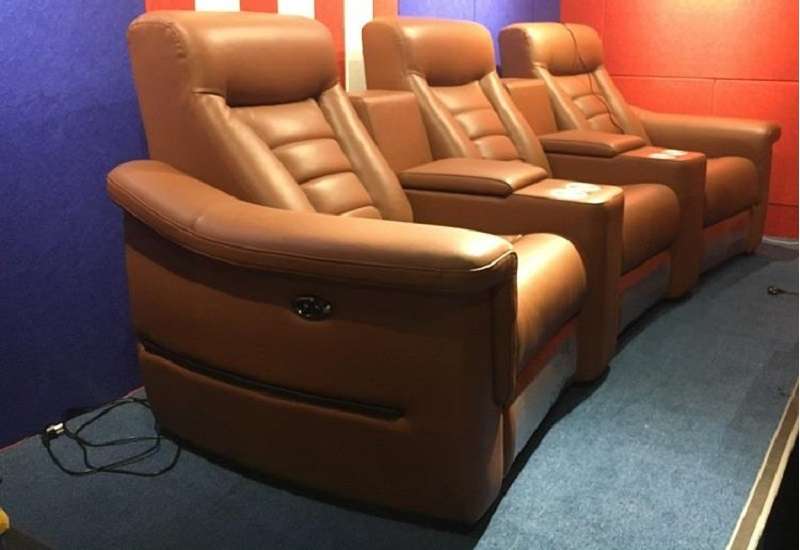
Curved Home Theater Seating With Console LS-876
- Curved Row Layout
- USB Charging Port
- Hidden Arm Storage
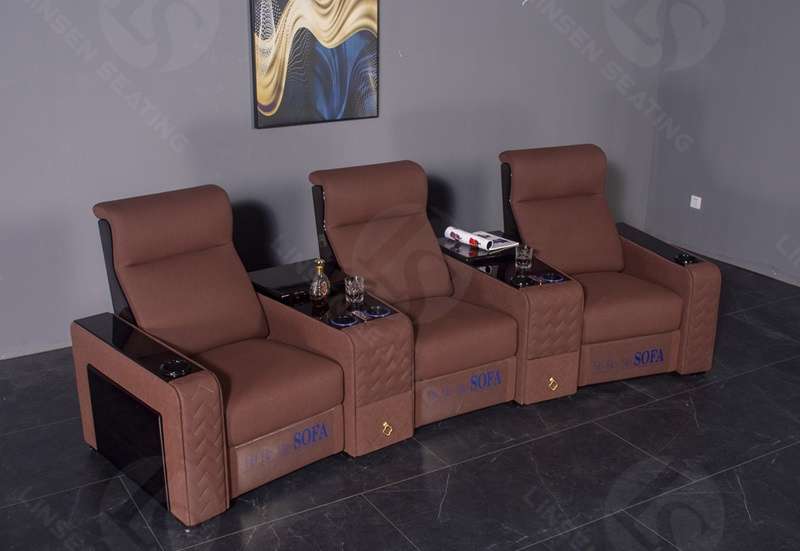
LS-6106 3-Seat Curved Theater Seating With Lifting Console
- Curved Row Layout
- Big Middle Console
- Lifting Hidden Storage
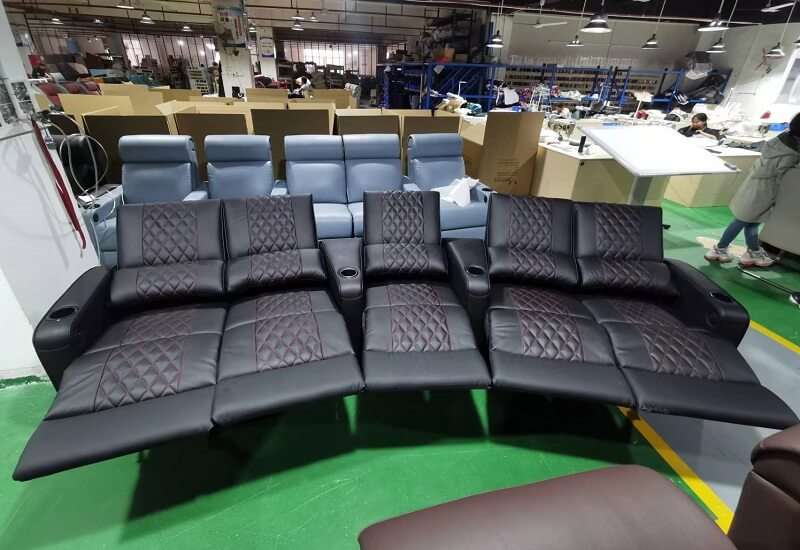
Curved home theater seating buying guide
Before you choose a curved row, work through the four factors that decide whether it will fit and perform in your room.
Room width
A curve pushes the end seats forward and outward, so it needs more width than a straight row. Allow roughly 30″ per seat plus end clearance; a 3-seat curved row typically wants 10–12 ft of usable wall.
Seat count
Curved rows are built in 2-, 3-, 4- and 5-seat or more versions. Wider rooms can run a larger single arc, or stack two curved rows on a tiered riser for stadium-style viewing.
Curve radius
The arc is set so each seat aims at the screen from its viewing distance. Closer rows use a tighter curve; rows farther back use a gentler one. A custom build calculates this from your room depth.
Consoles & features
Add center or lifting consoles for storage, cup holders and USB charging, plus powered recline, headrest and lumbar. These set the overall row width, so plan them in early.
Curved vs. straight: which layout fits your room?
Curved rows reward wider rooms and bigger groups; straight rows make the most of narrow spaces. For a full side-by-side comparison with room examples, read our guide on home theater seating layout: curved or straight row.
Custom & OEM curved home theater seating
Linsen Seating is the home theater recliner manufacturer — not a reseller — so every curved row is built to your specification rather than pulled from a fixed catalog. We tailor seat count, curve radius, upholstery, console layout and powered functions, and we support OEM and ODM orders for dealers, integrators and commercial cinema projects. Finished curved home theater seating ships worldwide direct from our factory in Foshan, China.
Frequently asked questions
What is curved home theater seating?
Curved home theater seating is a recliner row arranged on a gentle arc instead of a straight line. Each seat angles slightly toward the screen, so every viewer faces the display more directly. The layout improves sightlines, sound balance and the sense of immersion in a dedicated media room.
Why choose a curved row over a straight row?
A curved row points each seat at the screen, so viewers on the ends get a square-on view instead of an angled one. It also tightens the group around the focal point, which improves audio balance and creates a more social, theater-like feel. Straight rows suit narrow rooms; curved rows suit wider ones.
How much space do you need for curved home theater seating?
A curved row needs more width than a straight row because the arc pushes the end seats forward and outward. As a rough guide, allow about 30 inches of width per seat plus extra clearance on each end. A 3-seat curved row typically needs around 10 to 12 feet of usable wall width.
How many seats can a curved home theater row have?
Curved home theater rows are commonly built in 2, 3, 4 and 5-seat configurations, with or without center consoles. Larger rooms can combine multiple curved rows on a tiered riser. Because the seating is modular, the exact seat count and curve can be customized to your room.
Can curved home theater seating be customized?
Yes. As a manufacturer, Linsen Seating offers OEM and ODM customization of seat count, curve radius, upholstery, console layout and powered features such as recline, headrest and lumbar. Custom curved rows are built to fit your room dimensions and ship worldwide.
What is the ideal curve radius for home theater seating?
There is no single fixed radius; the curve is set so each seat aims at the screen from its viewing distance. Rows closer to the screen use a tighter curve, and rows farther back use a gentler one. A custom build calculates the radius from your room depth and seat count.
Related: Why choose curved home theater seating • Curved or straight row layout • All home theater recliners